Update, June 9: 2026: A federal judge yesterday struck down the Trump administration’s $100,000 fee on new H-1B visa applications calling it an “illegal tax” on businesses and institutions that apply for the visas.
CDA in November 2025 sent a letter to the U.S. Department of Homeland Security calling out the fee’s potential impact on rural and underserved communities, federally qualified health centers, dental schools and internationally trained dentists, who play a critical role in addressing dentist shortages and supporting dental education. CDA later obtained clarification from DHS on a visa fee limited exemption process that would provide a pathway for international dentists to continue contributing to California’s workforce.
Current bipartisan legislation would waive the visa fee for foreign health care professionals, but Congress has not taken action on the bill. Regardless, for now, the judge’s decision this week means the $100,000 fee for H-1B visa applications cannot be imposed on any institution or business.
Clarification on H-1B visa fee exemption
The administration could appeal the decision; however, even with a successful appeal, CDA has determined that the $100,000 fee is less likely to apply to internationally trained dentists and the clinics and dental schools seeking to hire them because these dentists typically complete an international dentist program in the U.S. after immigrating and before practicing.
Furthermore, CDA received clarification earlier this year that the $100,000 visa petition fee would not apply to dentists who are applying from inside the U.S. The fee would apply only to new H-1B petitions filed by applicants outside of the United States.
The DHS confirmed in a letter to CDA that employers seeking an exemption must submit a request with supporting documentation demonstrating that:
- The individual’s presence is in the national interest;
- No qualified U.S. worker is available, that the worker poses no threat to national security or welfare; and
- Paying the fee would significantly undermine national interests.
Again, as of June 9, 2026, per the federal judge’s decision, employers do not need to request an exemption to the $100,000 fee as it can not be legally collected. CDA will keep members updated on any legal developments.
California dental schools train greatest share of international graduates
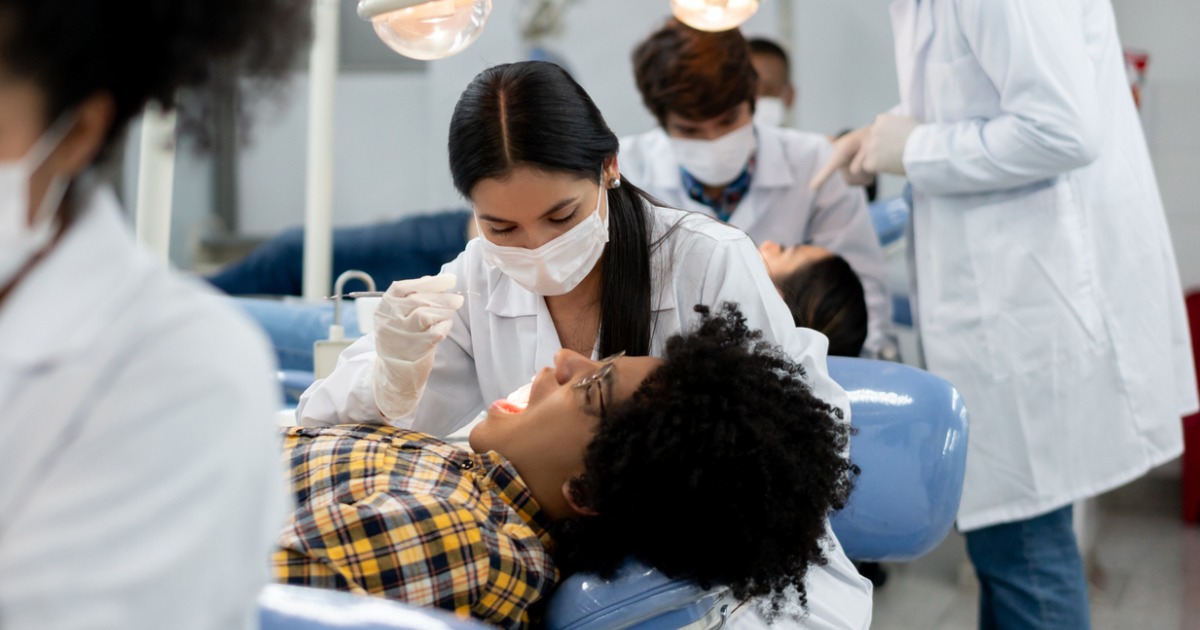
Internationally-educated dentists working in the U.S. on H-1B visas address critical health care in Dental Health Professional Shortage Areas, particularly in California, which trains a disproportionate share of international dental graduates. ADA Health Policy Institute data shows that 322 (4.8%) dental school graduates nationally in 2023-24 were non-U.S. residents. That same year, 144 (45%) were enrolled in a California dental school international program. International students represented over 22% of the 648 California dental school graduates that year.
Besides providing patient care, internationally trained dentists contribute significantly as educators and complete advanced standing programs at U.S dental schools. They often go on to become U.S. citizens or permanent residents, contributing long term to the profession and to society.