A new survey conducted by the California Dental Association found that 49% of Medi-Cal dentists would leave the program if the proposed cuts to provider rates take effect this year. Medi-Cal significantly increased dental reimbursement in 2017 and 2018 using funds from Proposition 56, the tobacco tax measure that California voters overwhelmingly supported in 2016. Prop 56 rates amount to 40% or more of the total reimbursement and were the first substantial dental rate increase in the program since the 1990s.
The rate increases, which comprise about one-third of the dental program’s total budget, were targeted for elimination in 2025 but were delayed until July of this year as part of the state’s 2025-26 budget deal.
More than half of the state’s children and a third of all adults rely on Medi-Cal for essential dental care.
Sustaining a Medi-Cal practice would be ‘infeasible’ if proposed cuts take effect
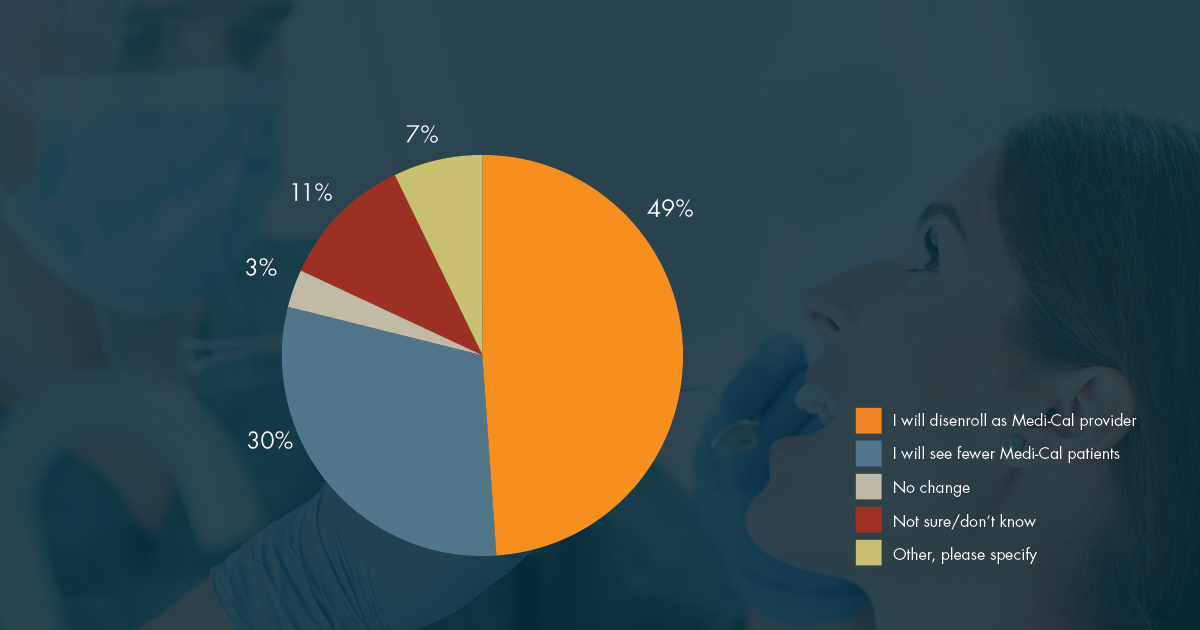
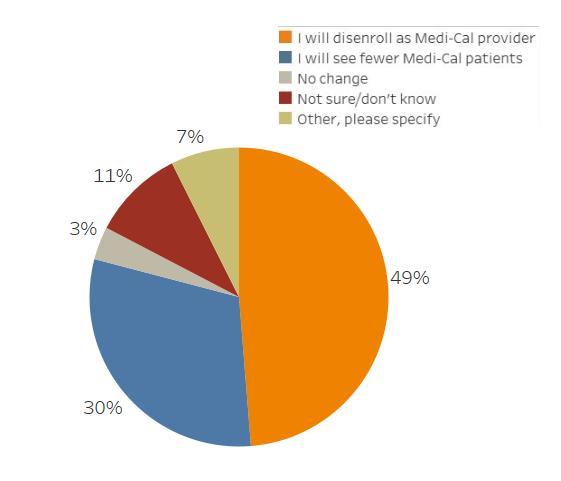
CDA received 1,527 responses from the survey it conducted late November and early December 2025 with 990 of the respondents currently enrolled as Medi-Cal dentists. Among the responding Medi-Cal dentists, 30% said they would see fewer patients in Medi-Cal and only 3% said they would not change the services they offer, as the chart below shows. Most dentists found that the proposed cuts would lower rates to a point that make sustaining a Medi-Cal practice infeasible and would likely lead to financial hardship and dental office closure.
“The rate cuts contemplated by the state are clearly not sustainable for the vast majority of dentists who participate in the Medi-Cal Dental program,” said CDA President Robert Hanlon, DMD, who himself treats Medi-Cal patients in San Diego County. “The rates provided under Prop 56 are by no means a minor add-on; they have been vital to the integrity of the network and access to care. Medi-Cal Dental rates, even with Prop 56, have always fallen far short of their commercial counterparts. This devastating cut will cause a mass exodus of dentists from the program forcing patients into ERs and complicating minor, otherwise treatable, conditions.”
While the number of Medi-Cal dentists has been on a historic rise since Prop 56 took effect in 2017 — increasing by 34% — many areas of the state still lack proper access to dentists, including specialists, which makes understanding the future of the Medi-Cal Dental program especially vital.
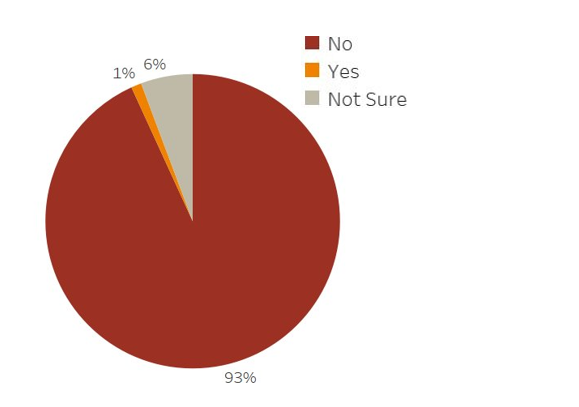
Of the survey respondents who are not currently Medi-Cal providers, 93% said they would not consider becoming a Medi-Cal provider in the future with the proposed cuts in place. Just 1% of respondents said they would be interested in becoming a Medi-Cal provider with the proposed cuts, while 6% said they were not sure, as chart below shows.
‘Prop 56 cuts would bring the program back to the provider rates of the 1990s’
CDA’s analysis of the rates for several common procedures found that the rate for an oral evaluations (CDT Code D0120) would drop from $45 to $15, while the average commercial insurance pays $82 for this procedure. This chart shows the most utilized dental codes and the impact of the proposed cuts on Medi-Cal rates.
“We understand the serious nature of the state’s budget situation,” Dr. Hanlon said. “However, one of CDA’s top advocacy priorities is working with the state to build up Medi-Cal Dental to be a viable option for more than 15 million Californians. The Prop 56 cuts would bring the program back to the provider rates of the 1990s and have a devastating impact on millions of patients.”
As the survey results indicate, rate reductions of this magnitude would cause a severe contraction of the Medi-Cal Dental network, similar to when adult dental was eliminated in 2009. When that occurred, the cost of untreated dental disease rapidly increased.
Research published last year by the American Dental Association’s Health Policy Institute described the consequences of delayed preventive dental care when the adult dental benefit was eliminated. Providers reported an increase in patients with dental abscesses. The repeal of comprehensive dental benefits was also associated with increased emergency department visits for nontraumatic dental conditions —an additional 1,800 visits per year. When the benefit was reinstated incrementally beginning in 2014, ED visits decreased immediately.
“California has already seen this experiment play out; it is costlier and more detrimental to patients and providers to make such drastic cuts than it is to maintain the program,” Hanlon added.
CDA has convened the Save Our Dental Care coalition composed of more than 70 organizations from all sectors impacted by the cut: professional dental and medical associations, hospital and long-term care groups, payers and dental plans, dental support organizations, community clinic and safety-net providers.
“Our coalition is fighting to stop the $1 billion in cuts that will devastate access to dental care for vulnerable Californians,” Hanlon said.
Learn more about the coalition, and watch the CDA newsroom, weekly member newsletter (Inside California Dentistry, sent every Friday) and CDA’s social media channels for more information on ways to get involved in this year’s budget advocacy to reject the Medi-Cal cuts.