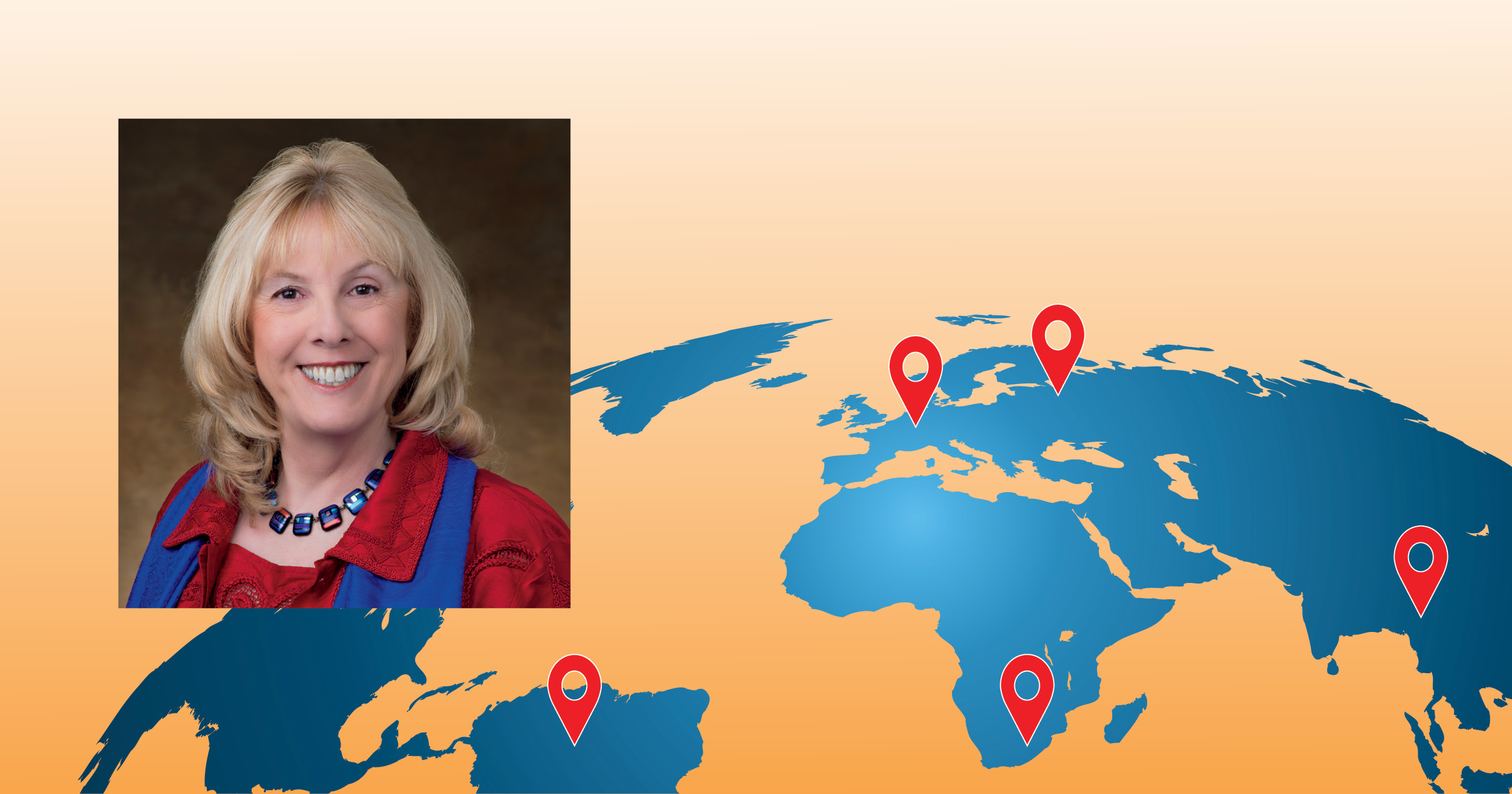
In the 18 years Dr. Kerry, K. Carney has served as editor-in-chief, she has seen the CDA Journal expand its reach far beyond California, bringing in perspectives and readers from around the world. We asked Dr. Carney how that global reach came about and what it means for CDA members and the dental profession today.
How does the Journal’s reach today compare to that of 10 or 15 years ago?
The biggest difference now is visibility. When the Journal was primarily in print, we really had no way of knowing who was reading it beyond our membership. Copies could travel–perhaps even around the world; they could be shared or sit in dentists’ offices or homes. But there was no clear picture of that reach.
That’s completely changed now thanks to our digital platform. We can actually see where readers are coming from, how they’re engaging with the content and what topics resonate across different regions. The data makes the Journal’s reach tangible instead of just a possibility.
So while the potential for broader reach may have always been there, being able to measure and understand it in real time has made that global presence much more meaningful and actionable for the Journal.
What opened the door to that growth?
Several things came together at the right time. First, as I mentioned, moving to a digital platform like Taylor & Francis significantly expanded the Journal’s visibility and discoverability. Second, the Journal is indexed in several major databases now. This means researchers and clinicians can find our articles alongside other leading publications. As a result, our submissions and readership naturally increase.
Open access has also been a key factor. When research is freely available, it removes barriers–not just for readers, but for authors who want their work to reach the widest audience for the greatest possible impact.
Together, those changes shifted the Journal from being primarily a regional publication to one that’s fully integrated into the global research ecosystem.
How has that shift changed the voices and perspectives you’re seeing in the Journal?
We’re hearing from a much broader range of contributors bringing new perspectives shaped by different health systems, patient populations and clinical challenges. That diversity adds real depth to our content and makes the Journal a much stronger publication.
Also, science itself provides a common foundation. Scientific data is our lingua franca.
Can you explain the phrase lingua franca and what your reference means for dentistry?
A lingua franca is simply a common language used by people who don’t share the same native language. In dentistry, scientific data is the common language. Researchers from different parts of the world may speak different languages or practice in very different environments, but they rely on the same evidence-based frameworks, study designs and clinical measures.
That shared approach allows findings to be communicated, understood and evaluated across borders and makes global collaboration and learning possible.
Why is it important for dentists to hear from researchers around the world?
Hearing from colleagues around the world reinforces a sense of professional connection. No matter where we practice, we’re all working to solve similar problems, like improving patient outcomes, managing disease and advancing care.
Global research also exposes dentists to different approaches and emerging ideas they might not encounter otherwise. That exposure can spark innovation and critical thinking.
How should dentists apply global research in their own practice?
Dentists should view global research as a source of insight, something to inform their thinking and to adapt to their practice when appropriate. However, not every finding will translate directly, so it’s important to always apply the information thoughtfully.
Journal research from around the world
- What happens when endodontic files break? Rio de Janeiro, Brazil
- Rare oral fungal infection leads to surprising diagnosis Mysuru, India
- Biofeedback: An alternative TMD treatment Vancouver, British Columbia
- Is it a tooth–or a giant salivary gland stone? Isfahan, Iran
- Patient views of dental care during COVID Rochester, New York
- Plain language: A simple tool for oral health literacy Bethesda, Maryland
Explore new research and more global health perspectives.