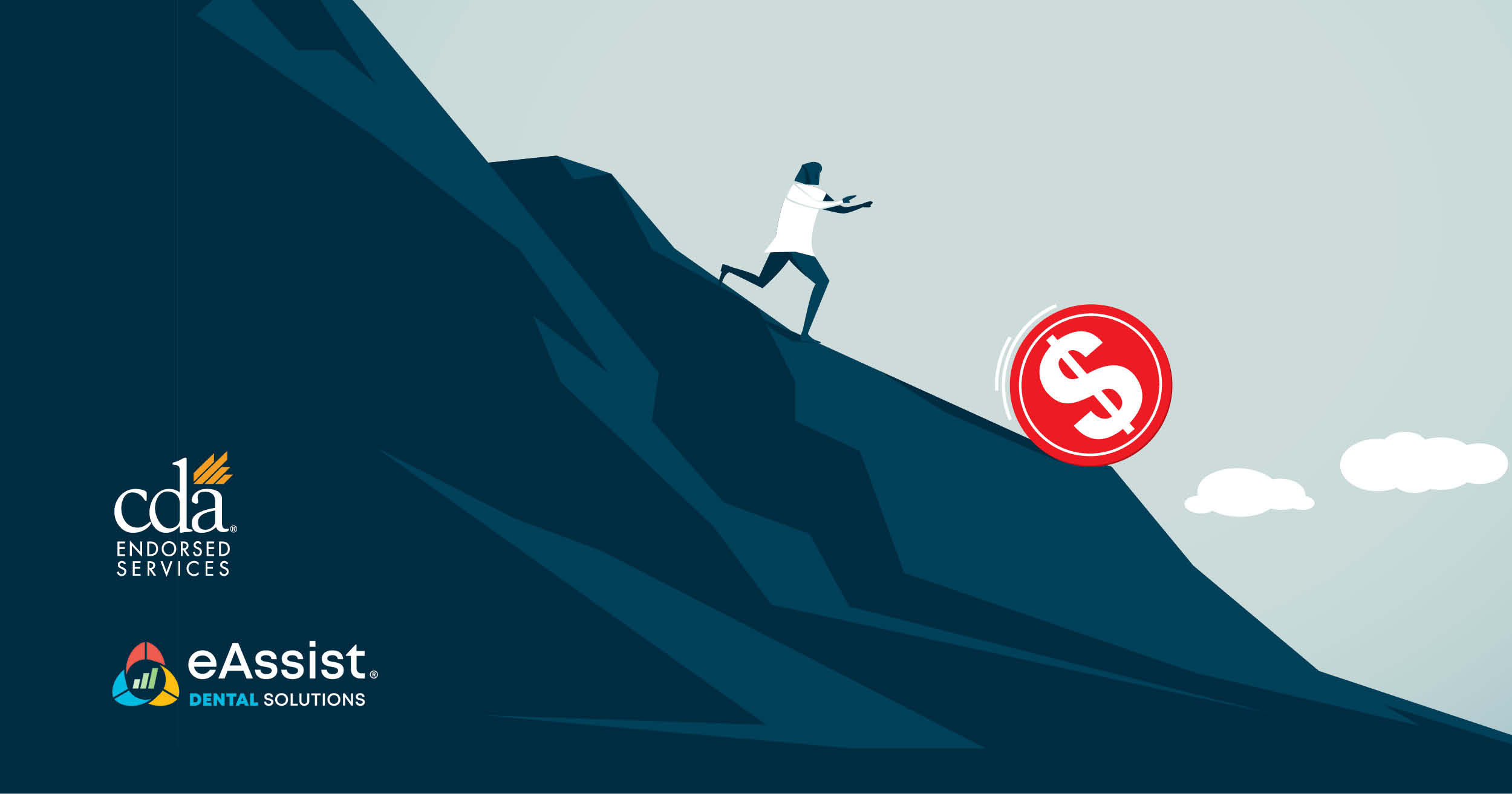
Revenue drain in a dental practice can happen quietly and gradually: a claim that sits unresolved, an insurance verification that comes back incomplete, a PPO fee schedule that quietly underperforms for years, or patient balances that pile up. Overlooking these financial drains can happen easily when your practice is busy and everything else seems smooth.
CDA Endorsed Services partner eAssist Dental Solutions created a free e-book to help practices address the financial gaps in their revenue cycle. CDA members can download “Fix the Hidden Leaks in Your Revenue Cycle: 8 Strategies That Protect Collections in 2026” for a deep dive into common revenue-loss causes and the strategies to stop them before they hit the bottom line.
Common areas of revenue leaks
PPO participation and credentialing
Fee schedules that haven’t been renegotiated in years can result in reimbursements well below market value on common procedures despite treating a high volume of patients. Credentialing delays create a similar problem: the work is being done, but reimbursement can’t start until enrollment catches up.
Insurance verification
A missed frequency limitation, age restriction or waiting period often doesn’t surface until after treatment, when it’s too late to have an accurate financial conversation with the patient or be reimbursed by the dental plan. The gap tends to show up later as a denied claim or a disputed balance.
Coding and documentation
A missing clinical narrative, an outdated CDT code or an attachment that never made it to the payor is a common, preventable factor in claim denial or delay. Getting claims out the door quickly matters, too. The longer submissions take, the longer payments take, and small delays across a full month of procedures add up.
Once a claim is submitted, it still needs to be tracked. Claims that pass 30 or 60 days without structured follow-up become considerably harder to collect, and denials that could have been appealed quietly turn into write-offs.
Outstanding patient balances
Statements that go out late or aren’t consistently followed up on are far more likely to go unpaid. Meanwhile, gaps in daily reconciliation make it harder to catch posting errors, unmatched deposits or missed payments before they become burdensome.
Medical billing opportunities
The option to bill for eligible medical procedures is often overlooked, leading to missed revenue. For example, procedures like sleep apnea appliance therapy or certain TMJ treatments often qualify for medical reimbursement.
The compounded impact of small losses
While seemingly small losses when taken individually, these gaps can add up to a meaningful share of a practice’s collections potential. To evaluate your current revenue cycle, potential leaks and ways to strengthen your bottom line, schedule a consultation with an eAssist specialist.