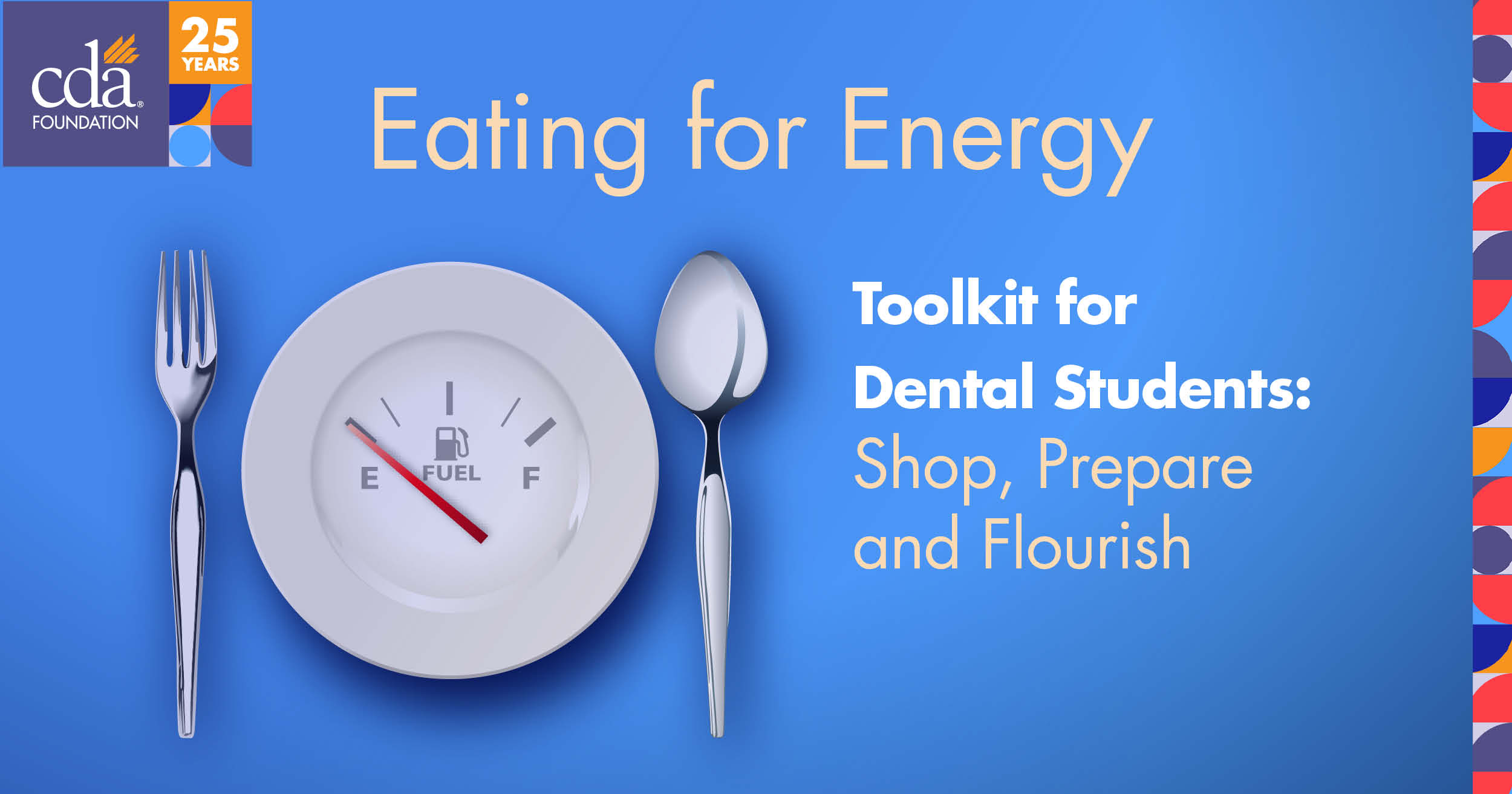
The CDA Foundation has published a toolkit to help dental students plan for and prepare simple and nutritious meals on a budget in an environment where the compounding pressures of tuition and rising tuition rates outpace financial aid and California’s cost of living that exceeds loan limits.
The “Eating for Energy Toolkit for Dental Students” is just one initiative of the Foundation’s Dental Student Food Insecurity Program, which launched in June following a $100,000 gift from the Scott and Susie Kim Family Foundation and an additional $100,000 from CDA’s family of companies.
The toolkit, developed in collaboration with a registered dietician, has already been sent to all seven California dental schools for integration into their matriculation programming. Every incoming dental student in California will receive an electronic copy, and, because food insecurity is not state-specific, the Foundation intends the toolkit to be shared with dental students across the country. The ADA and American Dental Education Association have received the toolkit for wider promotion.
‘This toolkit fills a real gap’ for dental students
“I’ve seen firsthand how difficult it is for students to prioritize their own nutrition while juggling coursework, clinic hours and financial stress,” said Bernadette Alvear Fa, DDS, professor and chair of the health and wellness committee at the University of the Pacific, Arthur A. Dugoni School of Dentistry. “This toolkit fills a real gap by giving students clear, practical tools to make healthier choices even when time and money are tight, because good nutrition isn’t separate from becoming a good clinician.”
The “Eating for Energy Toolkit for Dental Students” is organized into four sections:
- Making and shopping a grocery list on a budget
- How to read a nutrition label
- Meal guide using shopped ingredients
- Appendix with information about eligibility for CalFresh, California’s supplemental food assistance program
The toolkit explains how to read a nutrition label—what ingredients to look for and avoid—while the flexible meal guide lets students “upgrade” nutrient-dense quick-energy staples with ingredients that may cost more but are still cheaper than eating out. Overall, the meal guide is designed to meet most student budgets.
“I’m grateful that the CDA Foundation invested in getting this resource into students’ hands,” Dr. Alvear Fa added. “It’s not only for students but also for all oral healthcare providers.”
Emergency aid pantries to open on dental school campuses
Supporting emergency aid pantries on all California dental school campuses is the major initiative of the Dental Student Food Insecurity Program, and funding efforts are already underway. CDA will share more about the success of those efforts in the coming months.
You may donate to the Dental Student Food Insecurity Program through the CDA Foundation’s website.
The CDA Foundation is the nonprofit arm of the California Dental Association. Learn about all its current programs to address barriers to oral healthcare and improve outcomes, as well as its grant and award opportunities for California dentists who serve their communities.