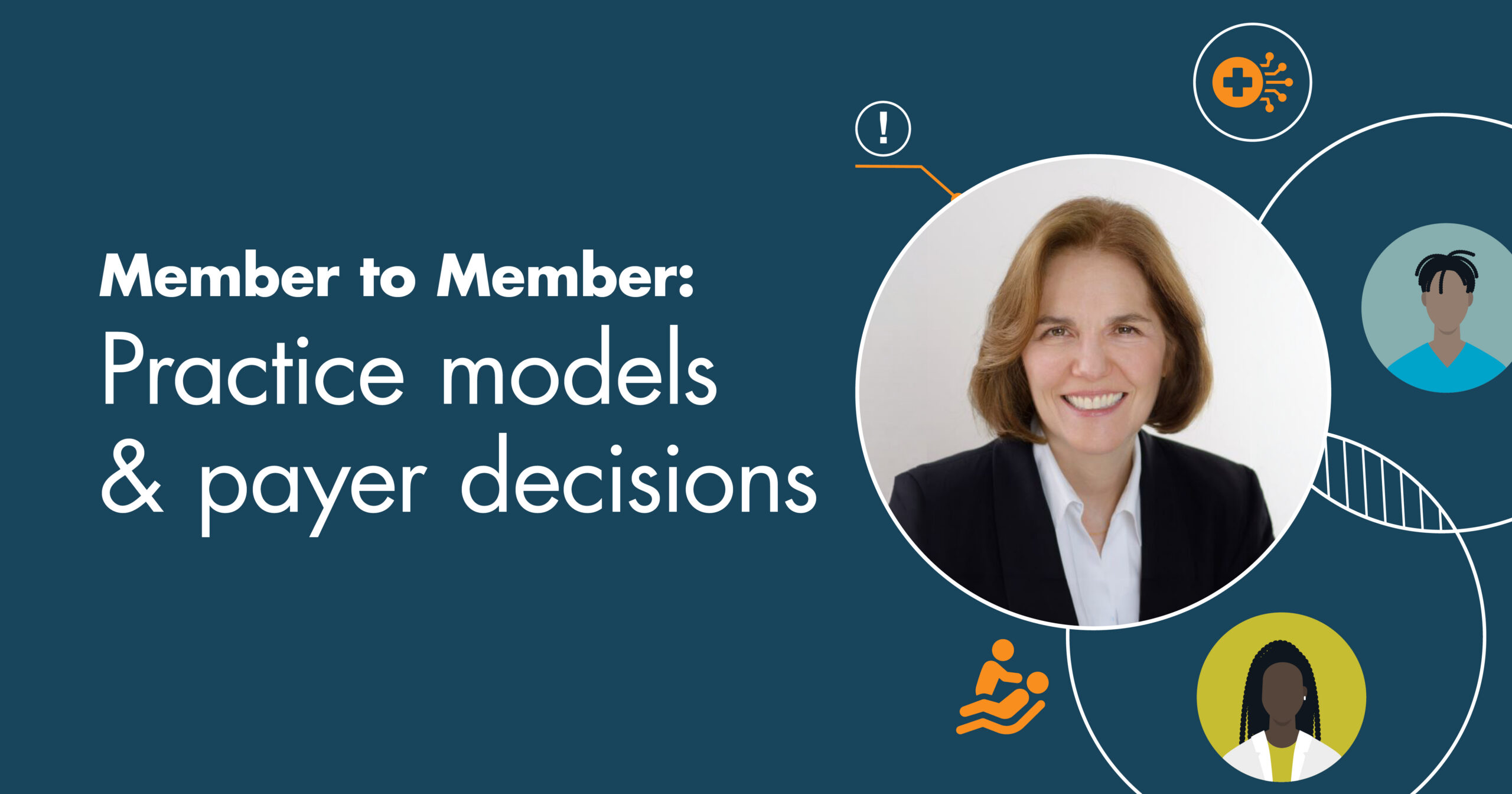
Margaret Mary Delmore, MD, DDS, would never claim she’s done it all in her professional life, but she has done as much as can, or certainly wanted, with her degrees and all the skills and experience they’ve given her.
“As my mom would always say to me, ‘Oh, God, Margaret, what are you doing now?’ she says with a laugh.
The highly abbreviated version of Dr. Delmore’s career arc looks like this: pharmacist, general dentist residency, oral surgeon in an emergency department, associate oral surgeon, solo practice owner (for over 25 years), a two-year stint in corporate dentistry and, currently, dental consultant with the California Department of Health Care Services (since 2021). DHCS is the state agency that finances and administers Medi-Cal and Medi-Cal Dental, which provide health care services to low-income individuals.
The longer version of her career arc, as Delmore shares it, gets even more interesting.
“My goal was to be a dentist. That is what I wanted to do, but I knew I’d have to come up with the funds to do it,” she said, acknowledging that, at that time, paying for an advanced degree with personal income was still within reach for many.
She considered the kind of undergraduate degrees she could get that would enable her to become a dentist by working her way through dental school.
“I liked the background of pharmacy and medication, so I became a pharmacist, then started dental school and actually worked as a pharmacist to help pay for my journey through that,” Demore said.
‘One perspective has remained constant: the patient’
During dental school, Delmore learned what she was and wasn’t good at and even questioned whether dentistry was right for her. She credits one of her professors, whom she called a really good mentor, for encouraging her to stay in the program.
“He told me, ‘Stick with it, you can do other things with your degree.’”
And she did. Delmore completed the required one-year general practice residency, which confirmed that she wanted to do oral surgery, but “not just straight oral surgery.” So she chose to go to medical school and enroll in an oral surgery training program.
“I chose the combined program because I thought, correctly, that it would allow me to do more reconstructive surgery and to really delve into treating more complicated patients,” Delmore said.
After moving with her husband to California from the Midwest, where she grew up and completed most of her training, she started working in the emergency department at the David Grant USAF Medical Center at Travis Air Force Base. There she treated family members of enlisted individuals before becoming an associate to an oral surgeon. Delmore stayed in her associate role for about six years before starting up a solo practice in Sacramento, where she practiced for over 25 years.
“It may sound like a weird pathway, but every part of my path and each degree I earned gave me a different perspective, and now here I am with the state of California using all of it. But one perspective has remained constant: the patient. The patient has always been at the center.”
A conversation at CDA Presents led to her role at the state
Delmore came into her current role as a dental consultant with the California Department of Health Care Services through a connection she made with another dentist at CDA Presents. She called it “blind luck.”
“I was attending a calibration session at CDA’s convention when this dentist approached me and said I had a very interesting background. She asked if I would be interested in working for the state.”
As the owner of a successful family practice, Delmore naturally had to think about the offer for a while. “Practice ownership was hard work, but I had a nice practice, loved the experience and loved my patients,” she said.
Two significant events led her to take the dental consultant position: First, she accepted the contact’s invitation to have lunch with her and several others at DHCS. There, Delmore learned more about the program and the role she would fill.
“The people I had lunch with were excited about their jobs, and they got to work with different people and do some exciting things.”
She was interested, but it was during the COVID-19 pandemic that she decided she needed a change, initially working for two years in corporate dentistry. “After that, I knew it was time for a bigger change,” Delmore said. “I wanted to see if I could affect more people than just one patient at a time, so I applied for dental consultant position and here I am!”
Problem-solving keeps day-to-day work exciting for Delmore
Working at DHCS, every day looks a little different for Delmore. She works mostly at the office and occasionally from home but is always ready to start before 7 a.m.
“Day to day, I attend state hearings, review case management and case exemptions. We also review audits,” she said. “There is always some busy work, but new problems and issues arise, and I really enjoy solving problems, which keeps it exciting for me.”
As an example, Dr. Delmore points to a call she got from the University of California, San Francisco otolaryngology department regarding their patients who had received radiation therapy. Due to the limited number of prophy visits allowed for adult Medi-Cal Dental members, patients were not getting all the care they needed. But with some research, Dr. Delmore and her team were able to provide a solution to the problem, enabling the patients to receive additional care and for the providers to be paid for their services.
‘We don’t just hand the patient a slip of paper and say, ‘here, go find a dentist’
DHCS has put a higher emphasis on case management over the last two years, Delmore said. She elaborates.
“We don’t just hand the patient a slip of paper and say, ‘here, go find a dentist.’ No, we try to find the dentist or specialist for them. Maybe this patient has a more complex situation that requires the involvement of multiple specialists, or maybe the patient needs transportation or language translation. That’s all part of case management, ensuring these individuals are not left out in the woods but instead receive the help they deserve.”
To accomplish this, DHCS works with the individual patient but also the regional centers, attorneys and “anybody who needs guidance navigating care in the Medi-Cal Dental program,” she said.
Delmore summarized a case she managed involving a patient with an underlying genetic disorder. The patient was in their late teens and was having trouble receiving all the care they needed.
Cases, like this one, sometimes come to the dental consultants through DHCS partner entities. When Delmore received the case, a determination had yet to be made over whether to restore multiple teeth or extract them and install implants. The vendor wanted a second opinion.
“‘She’s a teenager,’ I said. ‘We can’t do this [extractions] to her.’ It took some time, but we found a provider who would complete the treatment she needed, and it’s in progress now,” Delmore said.
As a former provider, Delmore puts herself ‘in Medi-Cal dentists’ shoes’
Delmore acknowledges that despite substantial improvements to Medi-Cal Dental that have greatly reduced administrative burden over the last 10 years, the program—and the healthcare system overall—can be difficult to navigate for everyone. She says her 33 years as a dentist provide insight, perspective and relatability that help her in her role.
“All the skills I’ve learned in my career are very helpful, but having been a provider myself, I can put myself in Medi-Cal dentists’ shoes,” Delmore said. “In fact, in many meetings at DHCS, I’ve said when something is not going to work at the provider level or be effective as policy.”
Similarly, she has recognized when a policy may not be beneficial for Medi-Cal Dental patients.
“I try always to consider the outcome for both the provider and the patient,” she said. “But I would say everybody here cares about the patients and providers. There’s a real excitement in this department. We’re here for one good cause.”
Advice for practice owners, associates and burned-out providers
Delmore says numerous dentists have approached her after Medi-Cal Dental program sessions during CDA Presents to say they’d like to have her job or want to know how they can get onto this path. Some of them are burned out or don’t want to be associates or do not want the responsibility of being a practice owner, while others are just looking for something different, she said.
“I encourage them to be curious and keep their eyes open because there are so many avenues for a dental degree,” Delmore said. “With a dental degree you know some medicine, you know dentistry. Most people don’t know dentistry, so they really appreciate a dentist.”
For the dentists who own a practice and are thinking about making a big change, Delmore says, sincerely, “Come talk to me first.”
“Going to the state was quite the switch,” she said. “I had a good practice, financially and with the direct care I was able to provide. It took a leap of faith to come over to the state, so you need to be willing to make that jump. If you’re willing, don’t be afraid to.”
Dentists interested in careers with the state have other options besides consulting for the Medi-Cal Dental program. They can work with the audits and investigation team, for example.
“As stewards of taxpayers’ money, this team checks for fraud, waste and abuse and reviews patients’ quality of care,” Delmore said.
Medical-dental integration is another potential place for a dental degree. Currently, the integration department at DHCS doesn’t employ a dentist—”but it could!” Delmore added.
Noridian, the Medicare contractor for the state, currently employs a dental director, and a DHCS partner employs dentists who do adjudication, primarily reviewing claims and treatment authorization requests. Elsewhere, the California Department of Public Health’s Office of Oral Health employs dentists.
‘Just know that your dental degree is so valuable’
“If you are feeling burned out on practice, you can do other things,” Delmore said. “Just know that your dental degree is so valuable. You don’t have to take my path through clinical dentistry. It gave me a very rounded perspective on health care, but we also know dental school debt is significantly higher today, so don’t forget the public health programs that offer educational loan forgiveness.”
Delmore says she does miss her patients and would consider practicing just one day a week if it were an option. (A conflict of interest prevented that arrangement when she accepted her current position.) Still, she loves her job, which is why she wants to share her story with CDA members.
“I jump out of bed in the morning, and I’m ready to go to work,” Delmore said. “In fact, another consultant asked me, ‘Do you always have to get here at 7?’ And I replied, ‘7? I’m usually here at 5.’”
More ahead in CDA’s series about members’ diverse practice models
Read more articles in CDA’s continuing series about member-dentists who have pursued diverse practice models, approaches to working with dental plans and patient care financing options.
Related resources:
- Careers at DHCS
- Alternative Pathways in Dentistry (CDA Journal collection, May 2024)
- Contact Dr. Delmore! (She offered to share more about her path and related opportunities directly with CDA members.) Email CDA for an introduction.