As of August 10, all seven of California’s dental schools have shared their progress with implementing a total of 25 new community based clinical education partnerships.
California’s Office of Oral Health enters the fourth year of funding with the CDA Foundation to administer the state’s project that CDA successfully advocated for in 2022, now funded by the California Healthcare, Research and Prevention Tobacco Tax Act of 2016, also known as the Proposition 56 Tobacco Tax. Dental schools used these funds to expand their Community-Based Clinical Education rotation sites in underserved communities throughout the state. In the last year of funding, sites are focusing on sustainability and evaluation.
Gaining experience, serving vulnerable populations: The value of partnership
Since July 15, 2024, over 340 dental students have trained in grant-funded rotation sites, totaling over 32,000 hours of direct patient care.
All rotation programs are in federally qualified health centers in Dental Health Professional Shortage Areas. Designated by the U.S. Health Resources & Services Administration, DHPSAs can be geographic areas, populations or facilities that have a shortage of primary, dental or mental health care providers and may include a significant low-income population.
Administration varies in the pilot programs, but each offers dental students the opportunity to work alongside staff dentists at the clinical sites to provide patient care and gain experience serving vulnerable populations, including people with special healthcare needs. Under dentists’ supervision, the students perform preventive and general dental procedures such as exams, cleanings, fillings and emergency care.
These partnerships with local health organizations are conduits for shared knowledge, resources and community engagement, fostering a practice-ready mindset for students by graduation. Dental students have seen 7,500 adult patients and 2,100 pediatric patients, a clear demonstration that these programs have value by increasing access to care and connecting students with clinics in high-needs areas. Students performed over 6,400 preventive procedures and 13,000 treatment procedures—a testament to the hands-on clinical care the programs offer in diverse settings.
Dental school CBCE rotation sites are assets for community health improvement. Partnerships with local health organizations are conduits for shared knowledge, resources and community engagement, fostering a practice-ready mindset for students by graduation. By extending dental services to underserved populations, the students play a vital role in improving access to dental care.
CNU students ‘return with greater confidence in their clinical capabilities’
In the last academic year, California Northstate University School of Dentistry had students rotate through six grant-funded partnership sites.
Dr. Mironda Frankenberger, Director of Community Rotations, shares: “Our students have consistently reported that this community rotations experience is the best experience of their dental education. Our students return with greater confidence in their clinical capabilities, a greater appreciation for FQHCs as health safety nets, and refined professional identities.”
She found grant funding “instrumental” to establishing community-based clinical rotations for CNSU’s first graduating class of 2025, the 2026 graduating class and students currently rotating for class of 2027.
“This program has allowed us to uphold the CNSU mission of advancing healthcare through service and social accountability,” Dr. Frankenberger said. Our dental college has made meaningful partnerships with the dental community in Greater Sacramento and beyond as a result.”
‘Transformative experience’ for USC School of Dentistry students
University of Southern California School of Dentistry CBCE Course Director Dr. Daniel Romo oversaw four CBCE grant-funded rotation partnerships in the last year. He shares that “these transformative experiences not only prepare students for practice but also inspire many to pursue careers in federally qualified health centers, where they can demonstrate a professional commitment to serving communities with limited access to care as a major direction of their professional trajectory.”
Presently, nearly one in three USC students who have rotated through the grant-funded CBCE program express interest in working in a DHPSA and, to date, six USC graduates have been recruited and hired at community health clinics in Southern and Central California, where they can participate in state loan repayment programs.
An employment pathway for Western University dental students
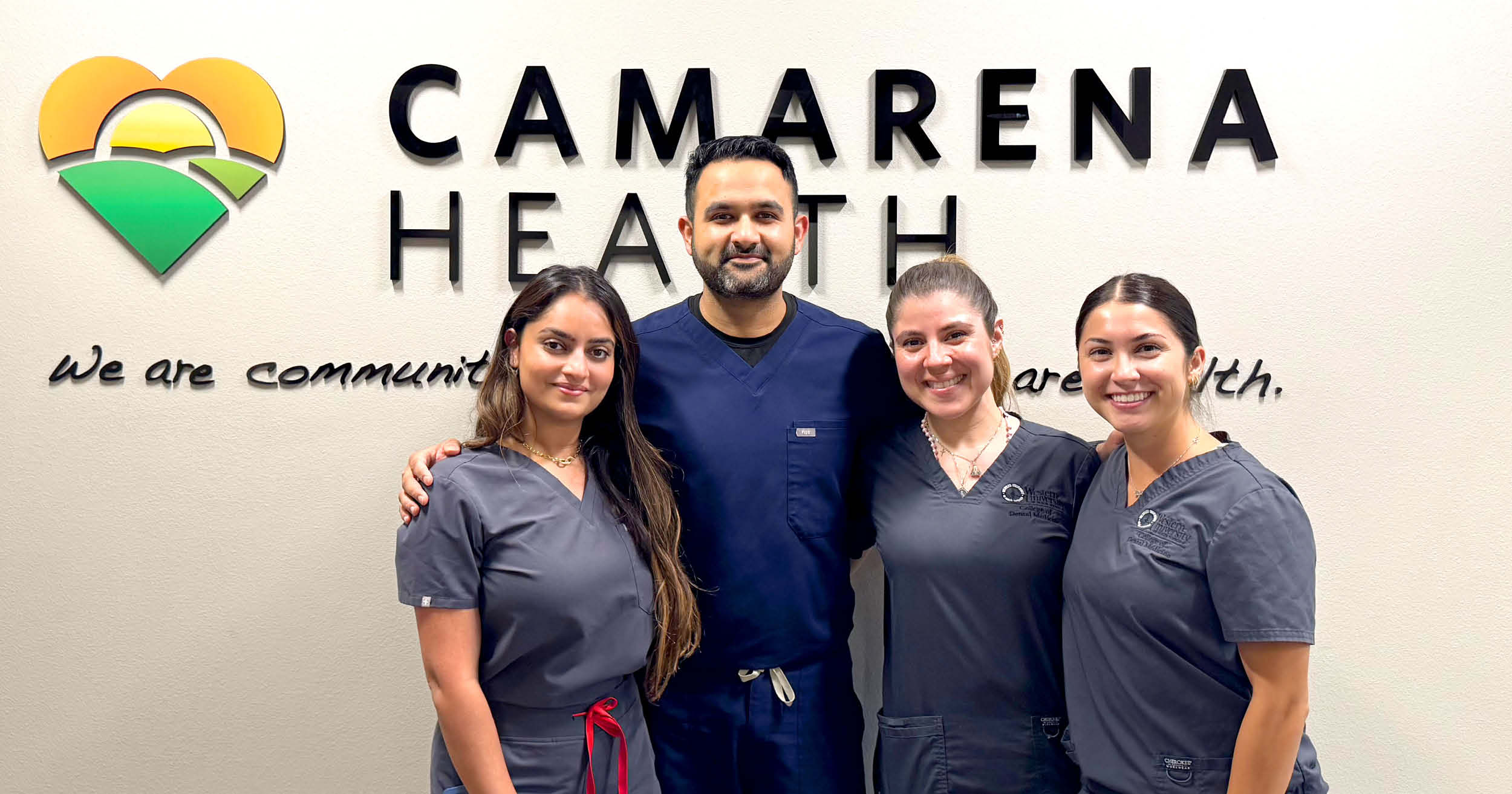
Western University recently saw recruitment in action with one of its clinic partners, Camarena Health, hiring two College of Dental Medicine graduates who had previously completed senior-year rotations at the site.
Dr. Watanabe, associate dean for Community Partnerships and Access to Care at Western University, says the recruitment demonstrates program’s success in creating a meaningful employment pathway. “This outcome directly supports efforts to strengthen the dental workforce in Dental Health Professional Shortage Areas by recruiting and retaining providers committed to serving medically vulnerable communities,” she shares.
Dr. Elaine Senaluck, adjunct clinical assistant professor at Western University and dentist at Park Tree Community Health Center, says, “Western University students were consistently recognized for their kindness, professionalism, strong work ethic, and patient-centered care; earning praise for their attention to detail, and positive attitudes. The faculty preceptors were highly impressed with their contributions and unanimously expressed enthusiasm about welcoming the Western University students back for another rotation.”
Rotation site ‘will diversify students’ clinical experiences’
In the 2025-26 academic year, Loma Linda University School of Dentistry started a clinical rotation at SAC Health Brier—a new federally qualified health center in San Bernardino. Through the CBCE grant, the university was able to support key personnel to plan and implement the rotation, which has developed into a significant partnership and clinical experience.
Additionally, SAC Health Brier has implemented digital technologies that were previously unavailable at the site.
These enhancements are improving workflow efficiencies, reducing patient wait times and increasing access to care for underserved populations. Plus, with the added technology at the sites, dental students will have consistent educational and training resources like they have had within their school.
“This partnership has had a meaningful impact on the dental education program,” shares Dr. Eun-Hwi Cho, associate dean at Loma Linda University School of Dentistry. “The addition of a regular external rotation site will diversify students’ clinical experiences by exposing them to different patient populations, care delivery models, and community health needs. Working within a community-based healthcare organization will strengthen students’ adaptability, interprofessional collaboration, communication skills and professionalism.”
UCSF School of Dentistry’s rotations ‘helped reduce wait times for new patients’
University of California, San Francisco is the latest dental school to use project funding to start partner rotations at two FQHC clinics in Hayward and Laytonville. Students have seen over 800 patients since the program’s implementation in March 2026.
Dr. Atwal Gurrinder, UCSF professor of Preventive and Restorative Dental Sciences, says that “student rotations have measurably improved patient access at both partner sites. Rotating students have helped reduce wait times for new patients and patients with urgent dental needs, while also adding production and patient volume to each site’s existing schedule.”
More CDA Foundation initiatives to improve outcomes
Learn more about other CDA Foundation initiatives, including the Dental Student Food Insecurity Program and the Oral Health Equity Report. The CDA Foundation is the nonprofit arm of the California Dental Association.
About the California Office of Oral Health
Learn more about the Office of Oral Health’s efforts to advance oral health equity, lead statewide data collection, shape dental public health programs funded through Proposition 56, and provide all 61 local oral health programs with consistent technical assistance and evidence-based standards.
Lead photo: Abhi Thakkar, DDS, dental director at Camarena Health, is pictured with three dental externs (Class of 2027) from Western University’s College of Dental Medicine.