Legislation that provides flexible new ways for unlicensed dental assistants in California to complete required infection control training, including through virtual course options, was signed into law Sept. 21 by Gov. Gavin Newsom and took effect immediately.
CDA supported Senate Bill 1311, authored by Sen. Aisha Wahab (D-Hayward), to bring relief to dental practices across the state that were struggling to meet the demands of a bill that took effect in January 2025. That bill, SB 1453, required unlicensed dental assistants to complete an approved in-person eight-hour infection control course before exposure to potentially infectious materials. The eight-hour training requirement was on top of bloodborne pathogen training already required by Cal/OSHA.
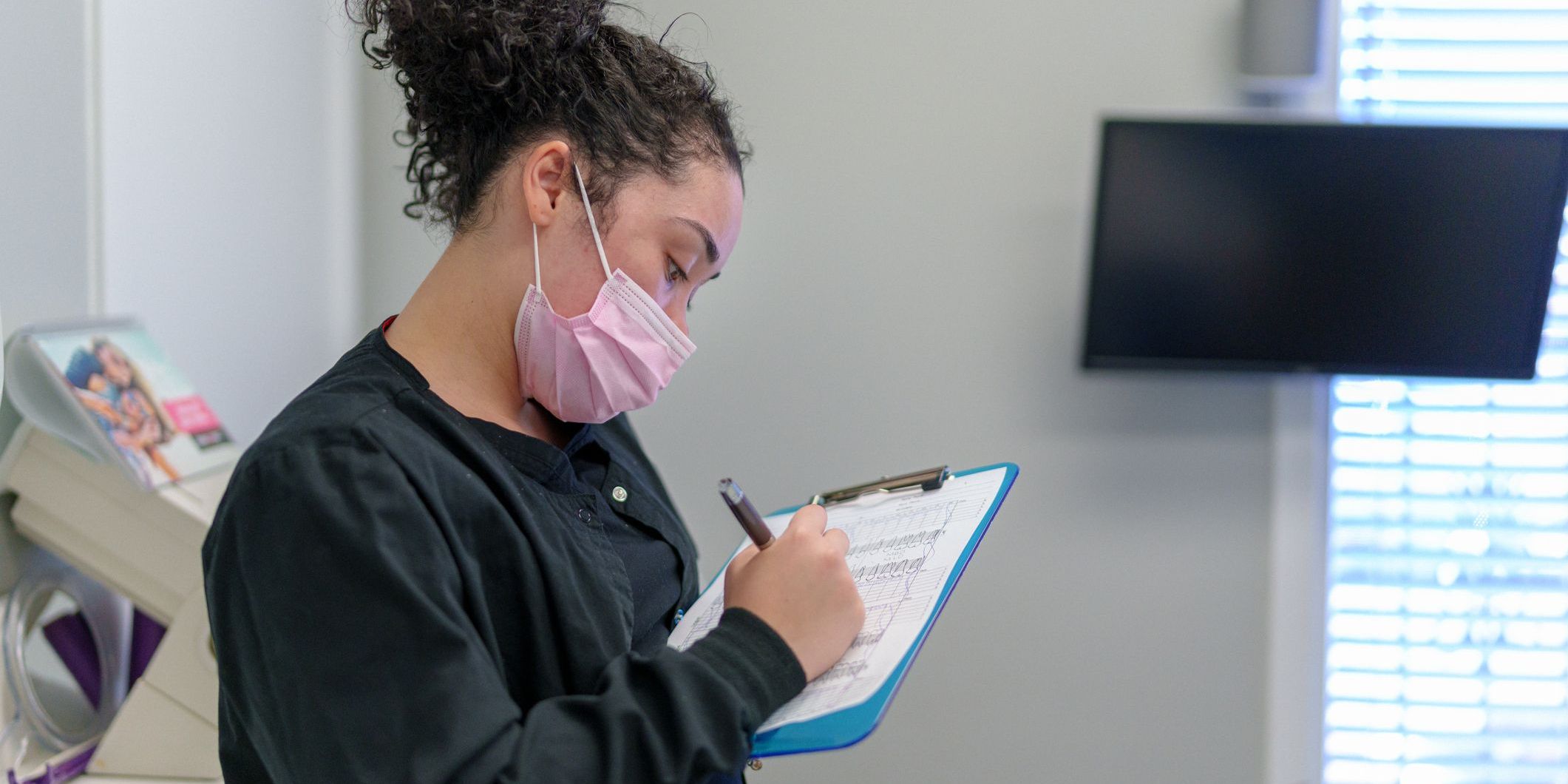
Because dental assistants are exposed to potentially infectious materials like saliva and blood on Day 1 in the dental office, dental practices that are already struggling to hire and maintain staff were increasingly burdened by the statutory requirement, with practices in rural and underserved areas having the greatest difficulty identifying approved in-person trainings. CDA has continued to champion a virtual infection control course option ever since SB 1453 included language changing the timing requirement for completing the course.
“Unlike medical assistants, who can begin working after completing their required Cal/OSHA training, unlicensed dental assistants must now also take a separate, state-mandated eight-hour infection control course before starting their roles,” CDA wrote in a letter to the governor urging his signature. “This is despite also receiving general onboarding and supervision from their dentist, who is ultimately responsible for ensuring the office complies with state-mandated infection control protocols.”
Six-hour virtual course is a new training option
Now, with CDA-supported SB 1311 in effect, unlicensed dental assistants in California can satisfy the infection control course requirement by successfully completing any of the following:
- Dental Assisting National Board’s Infection Control examination
- Six-hour virtual infection control course offered by CDA or providers accredited by ADA’s CERP or the Academy of General Dentistry’s PACE
- Dental board-approved eight-hour infection control course
The assistant must successfully complete one of the three options before they sterilize, provide chairside assistance or perform any other duty that can expose them to blood and saliva.
“Dental assistants play a crucial role in patient care,” said CDA President Robert Hanlon, DMD. “This victory on SB 1311 means unlicensed dental assistants can receive important timely training without unnecessary hiring delays that impact both dental teams and the patients they serve.”
Eight-hour in-person IC course still required for RDA licensure
While the dental board-approved eight-hour in-person infection control course is still required for RDA licensure, the virtual six-hour course satisfies the infection control training requirement for entry-level dental assistants. Other roles, including front-office employees, who do not require or wish to pursue RDA licensure, may also take the virtual course for cross-training purposes.
CDA last year recommended that practice owners document the reasons for noncompliance with SB 1453’s training requirement. With the CDA-sponsored bill signed into law, such documentation is no longer needed or recommended.
Coming soon: Six-hour virtual on-demand training from CDA
CDA is preparing to launch a six-hour, on-demand virtual infection control training course for members and their unlicensed dental assistants.
In the meantime, CDA encourages dentists ensure their unlicensed dental assistants take the Dental Assisting National Board’s Certified in Dental Infection Prevention and Control exam if the eight-hour in-person infection control course is inaccessible.
Member-dentists can use more dental assistant training resources from CDA, including recruiting, hiring and onboarding materials.
Gov. Newsom on Sept. 18 also signed CDA-sponsored AB 1629, the latest dental plan reform bill, and CDA-sponsored AB 350, which expands children’s access to fluoride varnish treatments. Learn more about these and other major CDA issues and priorities. Separately, the governor signed AB 1760, which includes a CDA-championed provision that allows radiation safety courses to exclusively use digital X-rays for full-mouth intraoral radiographic series.